Wing foil vs kitesurf: which watersport should you try this summer?
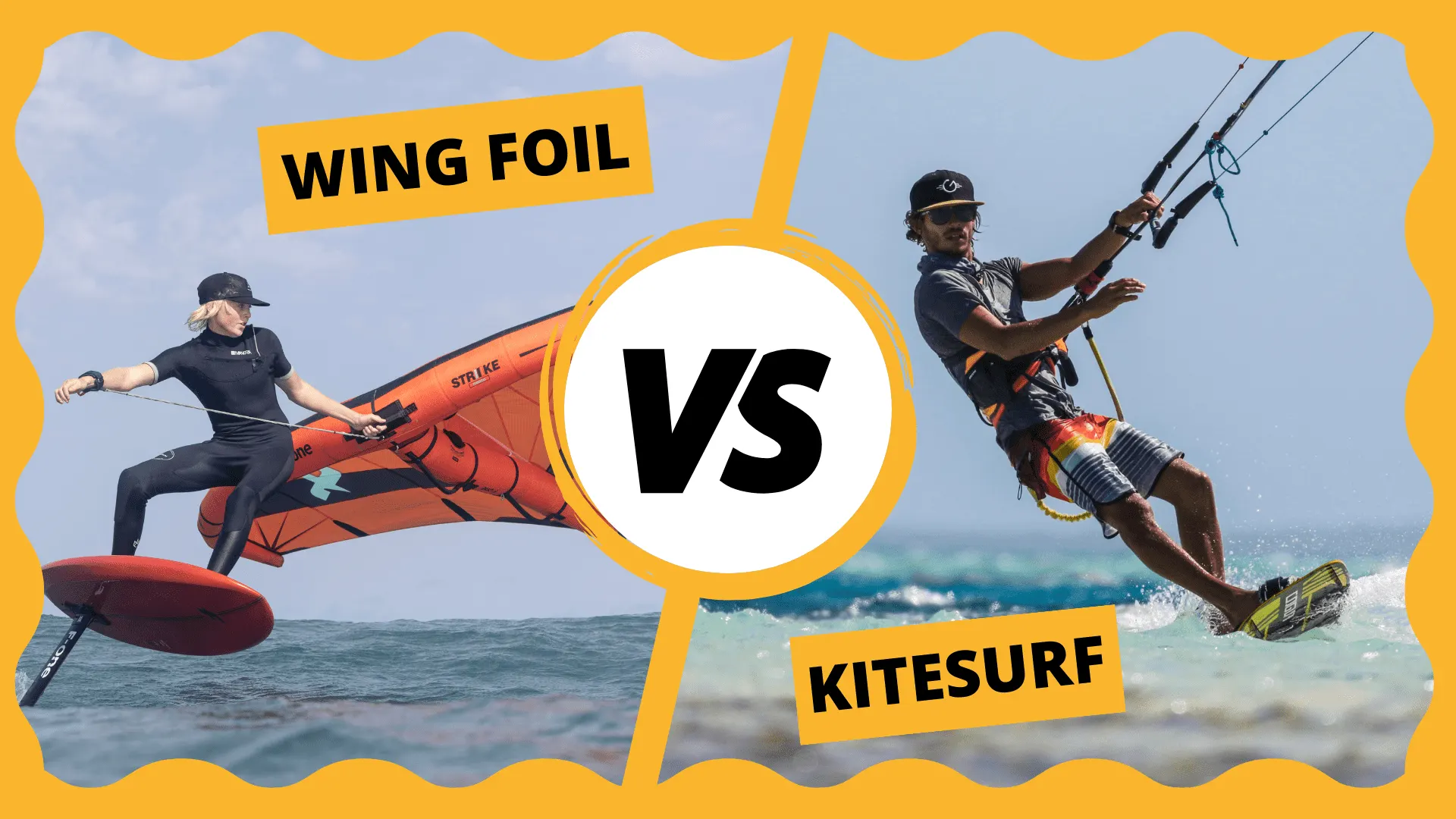
Although they may look similar, wing foil and kitesurfing are two very different watersports. The main difference lies in the wing. Wing foil was born from the idea of simplifying kitesurfing equipment, making it more accessible (whatever the weather conditions!). Discover 5 key differences between wing foil and kitesurfing to help you make your choice.
1. Equipment for wing foil vs kitesurfing
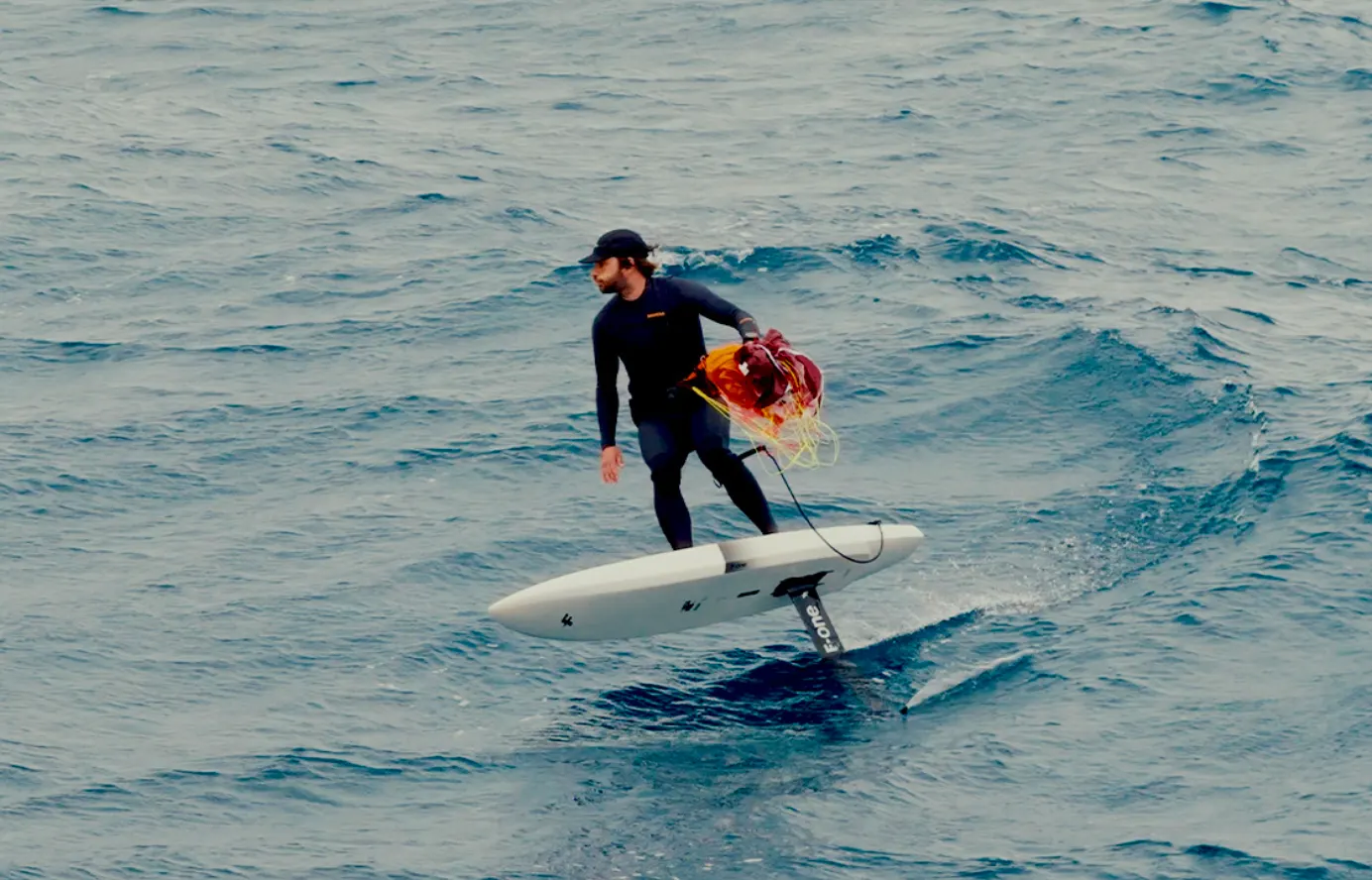
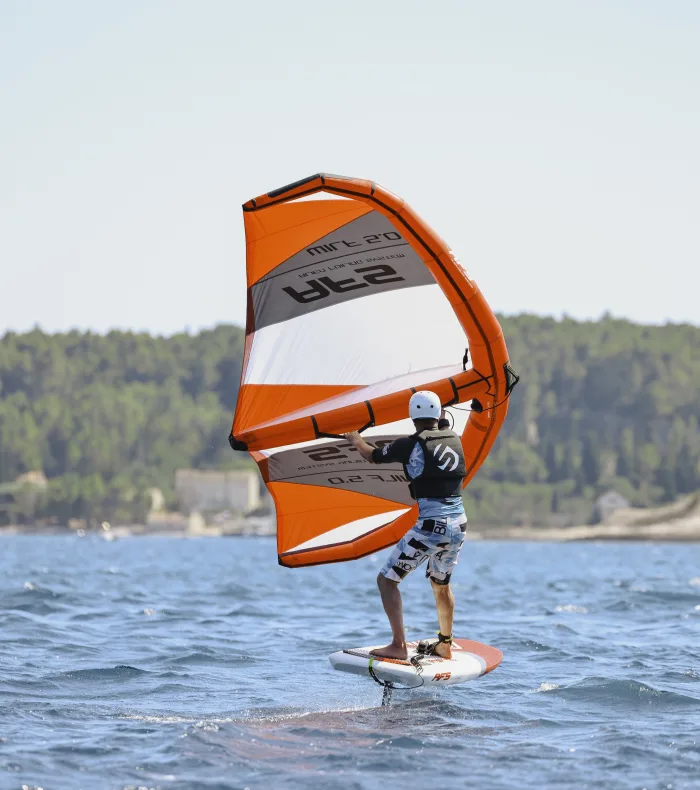
The first difference between wing foil and kitesurfing is in the equipment. Wing foil radically simplifies kitesurfing gear by removing the lines, bar and harness.
Essential kit to start wing foiling
To start wing foiling, you’ll need the following equipment:
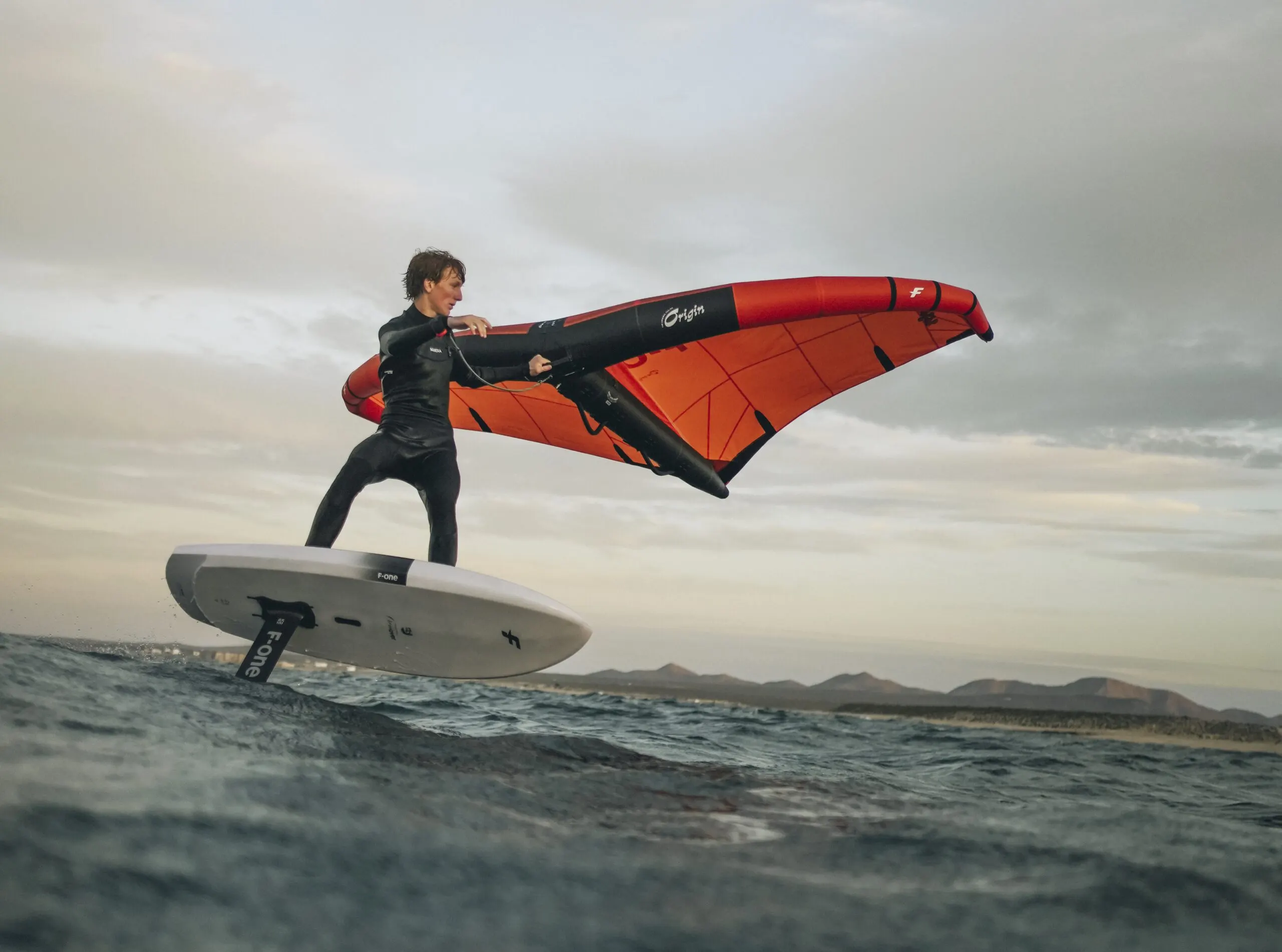
- a foil board (or hydrofoil), long and buoyant enough to be stable on the water;
- a wing (inflatable sail) with handles for a good grip;
- a wing leash and a board leash to keep your kit attached to you.
Essential kit for kitesurfing
The must-have equipment to learn kitesurfing includes:
- a board that’s short and wide, similar in shape to a wakeboard;
- a traction kite with 4 lines, connected to a control bar;
- a harness that links the kite to the rider.
2. How easy is it to learn wing foil vs kitesurfing?
Is it hard to learn kitesurfing? This is a common question from beginners. One reason why wing foil is stealing the spotlight from kitesurfing is that it’s more accessible. Learning wing foil is easier than kitesurfing for several reasons:
- the wing is easier to handle: the inflatable wing is lighter and smaller, so it’s much more direct to control;
- wider wind range: beginners can try wing foil in a greater variety of wind strengths, making it easier to learn and progress;
- lower risk of accidents: most kitesurfing accidents are due to line problems (breakage, tangling, etc.), which simply don’t exist in wing foiling.
3. Wind conditions for picking up speed
For the best ride, kitesurfing needs steady, consistent winds (15 to 25 knots). For beginners, it can be tricky to find suitable wind conditions. One of the advantages of wing foil over kitesurfing is that you don’t need to worry as much. Wind speeds between 10 and 30 knots are ideal to get started with wing foil.
4. Different riding techniques: wing foil vs kitesurfing
Unlike a hydrofoil, the kitesurf board stays in contact with the water, giving a ride that’s more or less smooth depending on the waves. Wing foil boards have a foil (a wing under the board) that lets you fly above the water. How long it takes to master your balance on the board and control the foil height varies from person to person (having some experience in board sports helps).
5. How easy is it to get back to shore if you drift?
Getting upwind is one of the main challenges when learning kitesurfing. If the wind is too strong (or too light), or you haven’t mastered the technique, it’s easy to drift and end up far from where you started. In this situation, it’s very hard to get back to shore (unless you have the support boat from Happy Kite School). In wing foil, it’s easier to paddle back with your hands (lying on the board). Still, it’s always quicker to head back to Port-Haliguen by boat.
Wing foil vs kitesurfing: who wins the ultimate watersports showdown?
More accessible and more fun, wing foil is the clear winner on the water. If you’re a beginner, it’s a great way to ease into water sports. Thrill-seekers won’t miss out either—flying above the water gives you an incredible sense of freedom. Ultimately, the choice between wing foil and kitesurfing comes down to which sensations you prefer. The best solution is to try both and see for yourself.
The Quiberon Bay is an exceptional playground, perfect for discovering board sports in complete safety. This summer, head to southern Brittany! Book your kitesurfing lesson and/or a wing foil course today. Either way, you won’t be disappointed!